
Why the terminology matters
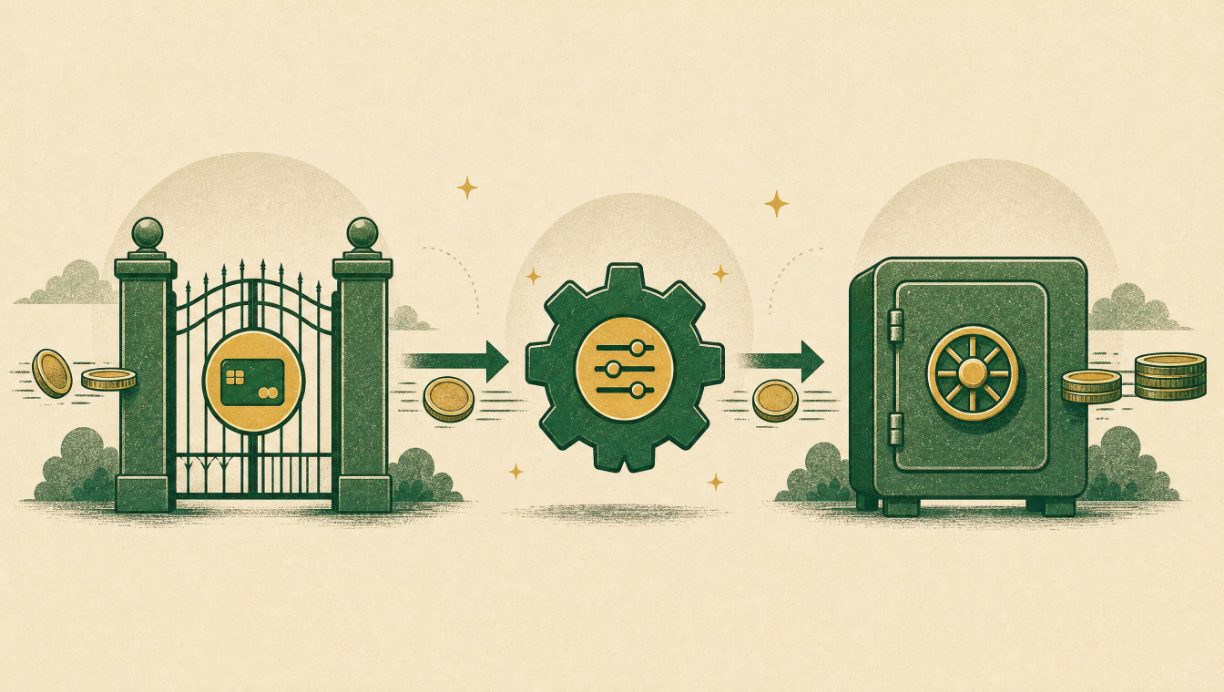
Gateway, processor and PSP describe three different jobs in a single payment. Conflating them is how merchants end up with the wrong contract, surprise fees, or a provider that can't actually support their category. Here's each role in plain terms.
The three roles
Who does what in a transaction
How a payment actually flows
- The customer enters card details — the gateway captures and tokenizes them.
- The processor sends the authorization through the card network to the issuer.
- The issuer approves or declines; the answer returns the same path in milliseconds.
- Later, the processor batches captured transactions for clearing.
- The acquirer settles funds (minus fees and any reserve) to your bank.
Why it matters when you’re high-risk
Generalist PSPs that aggregate thousands of merchants onto a shared account move fast for low-risk businesses — but their model is to drop anything that looks risky, often freezing funds first. High-risk merchants are usually better served by a dedicated merchant account with a specialist acquirer, fronted by a gateway and an orchestration layer that can route across many acquirers.
The aggregator trap
Aggregated PSP accounts can suspend you with little notice and hold your balance for months when volume or chargebacks spike. A dedicated account underwritten for your category is far more stable.
Where MIDs fits
MIDs provides the gateway and an orchestration layer on top of direct relationships with 30+ acquiring banks — so you get one integration, but real merchant accounts underwritten for your vertical and intelligent routing across all of them.
Key takeaways
- A gateway transmits card data; a processor moves money; an acquirer holds the merchant account and the risk.
- A PSP bundles those roles into one relationship — convenient, but often unstable for high-risk.
- High-risk merchants are usually best on a dedicated account with a specialist acquirer.
- Orchestration over many acquirers gives you one integration plus routing, failover and better approvals.
![What is Payment Orchestration? [Complete Guide]](https://mids.com/storage/media/blog/photo-5.jpg)
![High-Risk Merchant Account: Complete Guide [2026]](https://mids.com/storage/media/blog/photo-img2.jpg)