
What an offshore merchant account is
An offshore merchant account is acquiring held with a bank outside your home country. For high-risk merchants it isn’t about secrecy — it’s about access: when domestic acquirers won’t underwrite your category, or when you sell across regions, an offshore acquirer may have the appetite and reach that a domestic one lacks.
When you actually need one
- Domestic acquirers decline your category outright.
- You sell internationally and want local acquiring in more markets.
- You need redundancy beyond a single domestic acquirer.
- Your volume or model exceeds domestic risk appetite.
Offshore is a tool, not a loophole
An offshore account doesn’t exempt you from card-network rules, KYC/AML or your home-country obligations. It widens acquiring access — it doesn’t lower the compliance bar.
Jurisdictions, pricing & compliance
Jurisdictions differ in underwriting flexibility, settlement currencies, banking stability and reputation — the right one depends on your category and markets. Expect offshore pricing to sit at or slightly above domestic high-risk, with a rolling reserve. Compliance is non-negotiable everywhere: documented KYC/AML, sanctions screening and clean corporate structure.
Structuring multi-geography processing
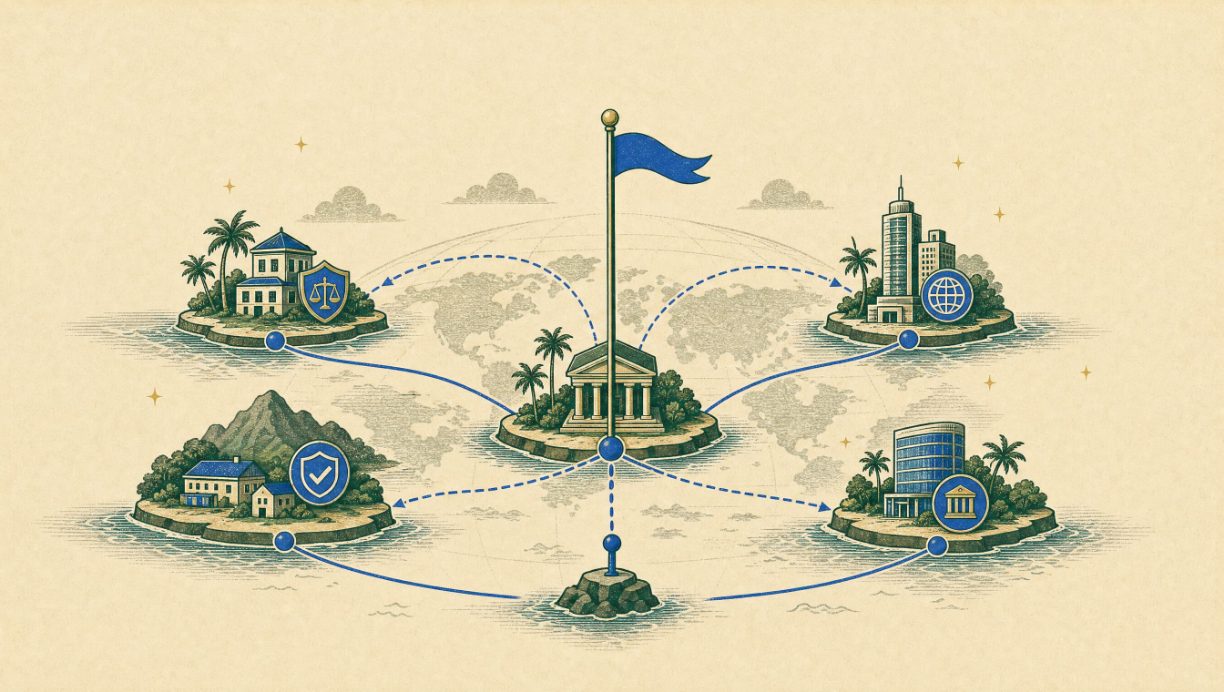
The strongest setups don’t pick offshore instead of domestic — they combine both. A domestic acquirer for home-market volume, offshore acquirers for categories or regions domestic won’t serve, and an orchestration layer routing each transaction to the best-placed bank. That gives you reach, redundancy and higher approvals at once.
How MIDs helps
MIDs holds relationships with both domestic and offshore acquirers across 30+ banks and orchestrates between them — so you get the access offshore provides without giving up the stability and routing intelligence of a managed network.
Key takeaways
- Offshore acquiring is about access and reach, not secrecy.
- You need it when domestic acquirers decline your category or you sell across regions.
- It doesn’t lower the compliance bar — KYC/AML and network rules still apply everywhere.
- The best structures combine domestic + offshore acquirers behind an orchestration layer.
![High-Risk Merchant Account: Complete Guide [2026]](https://mids.com/storage/media/blog/photo-img2.jpg)

![What is Payment Orchestration? [Complete Guide]](https://mids.com/storage/media/blog/photo-5.jpg)